
Call (508) 339-1418
Wicked Good Chiropractic & Wellness Group P.C.
  • Welcome
  • About
    • Meet the WG Team
    • Testimonials
  • Services
    • Acupuncture
    • Chiropractic
      • Motor Vehicle Accident Care
      • Pediatric Chiropractic
    • Massage
    • ChiroTHIN Weight Loss
    • Supplements & Medical Foods
    • Infrared Sauna
    • Reiki
    • WG Stretch
  • New Patients
    • Insurance Information
    • Hipaa Privacy Notice
    • Massage Welcome Forms
    • Chiropractic Welcome Forms
  • Contact
    • Sign up for our mailing list!
  • Schedule Your Appointment
  • SMS Privacy Policy
  • Privacy Policy
  • Menu Menu
Blog

Get Rid of Tech Neck Stiffness

tech neck stretches

Wicked Good Chiropractic Wellness Group

Since Quarantine became a thing I have noticed more hunching forward posture and neck pain in my office, I have been looking for helpful ways to help you at home:

Ever feel like you’ve been in 1 position too long, & your neck hurts from looking at your computer screen all day??? Too many at-home meetings…too many texts, and the list goes on.

So, here’s more yoga type “at home” stretches you & your family can do to help reduce neck pain:

I can’t take the credit here, I found this while hunting on Pinterest for ideas for anything, something to eat, something to do, some new work out routine…we’ve all been in the house so long! Heres the link to the original article: https://blog.paleohacks.com/yoga-poses-tech-neck-pain/#

So here’s an overview:

#1  Tech Neck Cat Cow
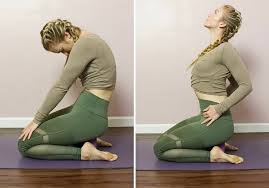
This variation of the traditional cat cow sequence will help to realign your neck, reset your shoulders, and relieve pain caused by looking down at your screen.

  1. Kneel down on your mat and put a block or small pillow between your feet. Sit your hips back on the block or pillow. Place your palms face down on your knees.
  2. Exhale to lean back against your palms and tilt your chin down towards your chest, rounding your spine.
  3. Inhale to lift your chin and chest. Slide your hands back into your hip creases and point your elbows straight back, squeezing your shoulder blades together. Then lift your chin and chest up towards the sky.
  4. Continue alternating postures for eight rounds of breath.


#2 Jalandhara Banha
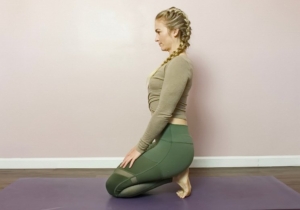
Use this simple yoga pose to help realign your cervical spine, preventing a hunched over back.

  1. Begin kneeling on your mat with your toes tucked under and your hips on your heels. You can also sit on a block. Place your palms face down on your knees.
  2. Tilt your chin down slightly and lift your chest up slightly. Squeeze your shoulder blades together.
  3. Then, pull your chin back towards your throat. You should feel a lengthening in the back of your neck as your cervical spine comes back over the thoracic spine. Hold for five deep breaths.

#3 Bound Forward Fold
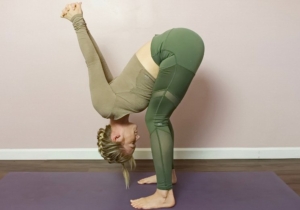
Straighten up your chest and shoulders with this forward pose.

  1. Stand with your feet hip-width distance apart. Interlace your fingers behind your lower back and squeeze your shoulder blades together. Make sure that there is a tiny bend in the elbows.
  2. Inhale to puff up your chest, then exhale as you bend deeply into the knees and fold forward.
  3. Rest your torso on your thighs and allow your hands to come off of your lower back as much as they can without forcing it. Hold for five breaths, then slowly stand back up on an inhale to release.

#4 Baby Cobra
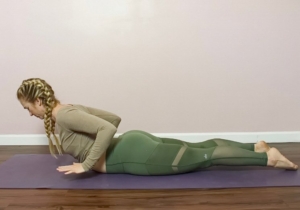
Straighten out your posture by strengthening your back and rear delts with this heart-opening pose.

  1. Lie face down on your mat with your legs straight back behind you. Bend your elbows and place your palms on the mat next to your ribs. Your elbows should be stacked over your wrists.
  2. Press your feet down as you inhale and lift your head, chest, and palms off the mat. You should feel the muscles that run along the spine strengthening.
  3. Hold for five deep breaths, then gently release.

#5 Camel
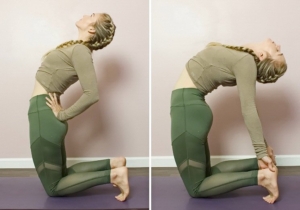
Take the hunch out of your back with this chest and throat opening yoga move.

  1. Kneel down on the mat with your knees hip-width distance apart. Place your palms on your lower back with your fingers pointing up and squeeze your shoulder blades together.
  2. Inhale to lift your chest up and back to come into a backbend. Make sure that you are lifting out of your lower back the entire time.
  3. You can keep your hands on your lower back or to go deeper, place your hands on your heels. Once you are in your full expression, tilt the chin up and back to open the throat. Keep the neck nice and long the entire time. Hold for five breaths.

#6 Downward Facing Dog
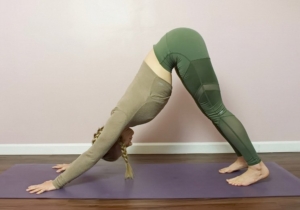
Realign and lengthen the spine with this classic yoga pose.

  1. Start in a tabletop position with your shoulders stacked over your wrists. Spread your fingers wide and roll your shoulders outward so that the pointy part of your elbows point back towards your feet.
  2. Keep the arms engaged as you tuck your toes and lift your hips up towards the sky to come into your downward facing dog.
  3. Bend your knees as much as you need to for your spine to be straight. Drop your head and press your chest up and back towards your upper thighs.
  4. Hold for eight breaths.

#7 Shoulder Pigeon
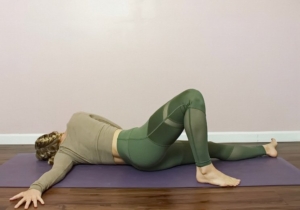
Ease into this chest opener to reverse your slouchy posture.

  1. Lay down on your belly.
  2. Place your left palm under your left shoulder and extend your right arm straight out to the side with the palm face down.
  3. Bend your left knee and press through your left palm to roll onto your right shoulder. Place your left foot on the floor outside of your right leg.
  4. Close your eyes and breathe deeply for eight breaths, then switch sides.

#8 Sage’s Twist
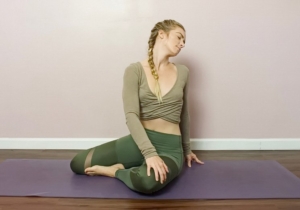
This pose releases neck tension and mobilizes the spine.

  1. Sit on the floor with your legs straight out in front of you.
  2. Bend your right knee back towards your right glute so that the shin and top of the foot are on the floor. Then, bend your left knee and bring the sole of the left foot to the inner right thigh.
  3. Tent your left fingers behind your left hip and reach your right arm straight overhead. Inhale, then exhale to twist your torso to the left, placing your right palm on the outer left thigh.
  4. Lower your left ear towards your left shoulder to feel a stretch in the front right side of your neck.
  5. Hold for eight deep breaths, then switch sides.

#9 Supported Fish
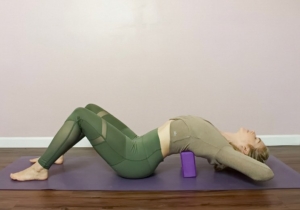
This heavenly restorative pose will reverse the effects of tech neck and poor posture.

  1. Sit on your mat with your knees bent and your feet on the floor. Place a pillow or a block on the low or medium height behind you.
  2. Use your hands to lower your back onto the block so that it rests comfortably on your upper back. Your hips should stay on the ground the entire time.
  3. Interlace your fingers behind your head and lean your head back into your palms. Open your elbows out wide. Hold for eight slow breaths.

Have fun, Take your time. As I tell my patients do what you can as you can with stretches & keep working at it & you will be able to perform them soon without pain & completely, and you will feel better for it.  -WickedDrSarah

April 19, 2020/by Wicked Good Wellness Group
https://wickedgoodchiro.com/wp-content/uploads/2020/04/Jalandhara2-1.jpg 520 744 Wicked Good Wellness Group https://wickedgoodchiro.com/wp-content/uploads/2025/05/wicked-good-chiro-wellness-logo-300.jpg Wicked Good Wellness Group2020-04-19 13:14:402020-08-31 15:23:32Get Rid of Tech Neck Stiffness
Blog

Working from home? 5 stretches to help after a long day!

working from home

Seriously, Is this really happening?

As a chiropractor I have been deemed an essential service, after years in the background I am happy to have this status! I am happy to be here for you – the #workathomers because –

when I decided the safety of my employees was a top priority – during the short time we closed for the initial “15 days to slow the spread” as recommended by the US government I couldn’t stop thinking about YOU.

How is everyone handling the work at home ergonomics? Were you thinking that I wasn’t there for you while you are having back pain from sitting at your kitchen table or on your couch? Should I just suck it up & get back in there?  As The Pats would say: Do your job?

YES!

So we re-opened and I am glad I did- You did need me! 99.9% of my clients I saw in the office this week were glad I was open, they were having muscle & back, neck pain complaints from sitting and working at home. I felt better, you feel better – Isn’t that why we are here – to help one another in any way we can?

At Wicked Good Chiro, I always wanted my office to feel like your third place (more on that later) & I did that & you are welcome in my office anytime.

I worked at Starbucks for years, I love coffee – That is another story! Starbucks trained us to have excellent customer service, as you are only as good as your customers are willing to come through your door. It is those customers that you want to feel comfortable, as comfortable in the coffee shop as they do at home, as they do at work – and for most of you, that place is now the same!

Even if you just want to be out of your other “comfortable places”, come on in – say HI, get an adjustment and feel normal for a few minutes – because you are welcome here at Wicked Good.

This was the week for stretch requests: What can I do at home to help questions.

So here it is

For those of you that need extra care at home, here are 5 stretches to do after your endless sitting marathons, Zoom meetings & becoming a homeschool expert

#1 Your Chest Muscles

Why you need to stretch them: “We tend to lean forward or slouch when we sit, which creates issues even down to your lower back. When that happens your chest muscles remaining tight can lead to postural problems and shoulder pain. So stretch!

How to: The best way to stretch or open your pecs is to perform movement patterns that pull your shoulders back. You can do this with foam rolling, stretches, or strengthening exercises, but her number one exercise for this is a reverse fly. “It strengthens your back and stretches your pecs. If your back muscles are weak, you will have a greater tendency for tight pecs. So usually solving flexibility problems is best complemented by also strengthening the opposing muscle.

I recommend a 2 move stretch/strengthen to accomplish this:
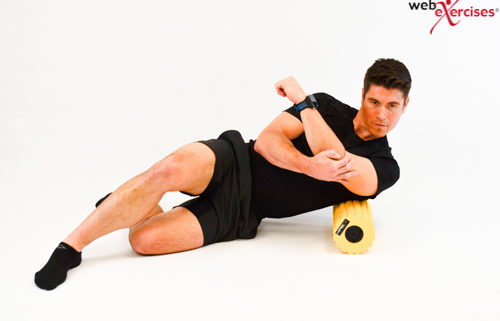
Stretch on your foam roller first – If you can’t tell what I’m doing in this pic ( I recruited my mini-me to help take pics)  – my foam roller is ALONG or with my spine, and I am stretching my head, arms & lower spine.

Then do Reverse Flys to strengthen –

Start standing with feet shoulder-width apart and dumbbells in hand. Hinge at the hips so that back is nearly parallel to floor and micro-bend knees. Let the dumbbells hang straight down, palms facing each other. Keeping back flat and torso still, engage back muscles to lift arms straight out to sides until they’re in line with shoulders. Your upper body will form a “T.” Return to starting position then repeat for 3 sets of 12 reps.

To stretch, cross your arms in front of your body, then pull your arms back behind you as far as possible. At the end point, hold for 15-30 seconds then repeat. You should feel a stretch in your pecs, along with contraction of your back muscles.

# 2 Your Hip Flexors

Why you need to stretch them: When you sit, your hips are flexed—and when your hips are flexed, the muscles of the hips shorten. And if your hips are placed in a shortened position for an extended period of time—and you don’t do exercise to extend the muscle back to a normal length—this then pulls on your back & hips which can lead to limited movement and lower back pain.

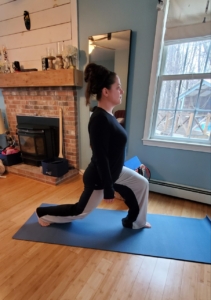
How to: A simple lunge is will work because it opens the hips and stretches the associated muscles.
Stand tall (holding dumbbells in each hand at sides is optional). Take a big step forward with right leg and lower body until the right thigh is parallel to floor and right shin is vertical. Make sure your the alignment of the front knee is directly above your ankle, and your other knee doesn’t touch the floor. Keep the weight in your heels. Press into the right heel to drive back up to starting position. Continue on your right leg for 8 to 12 reps then repeat on opposite leg. That’s one set. Complete 3 sets.

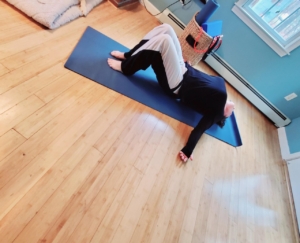
Special note: My other FAVE hip flexor Stretch is to lay on my back and place a yoga block under my tail bone and stretch out flat

# 3 Your Spine Muscles

Why you need to stretch them: When you’re slouching, it puts extra stress on your mid to lower back fascia and the muscles supporting your spine.  If these muscles don’t have enough strength and/or endurance, the demands of sitting (or holding your core up) become too much and you’re setting yourself up for pain.

How to open them up: Opening your hip flexors is key—they cross multiple joints, including your entire lumbar spine. These exercises can help: Planks and push-up

Start at the top of a push-up position, shoulders directly over wrists. Draw shoulders down and back and engage abdominal muscles tight to keep hips in line with shoulders so your body forms a long, straight line. Squeeze legs and glutes for support and hold this position for 45 to 60 seconds, or lower chest to hover above floor before pushing back up to start.

# 4 Your Piriformis

Why you need to stretch it: Your piriformis is an essential muscle located deep in the butt, behind your glutes. Sitting changes your pelvis in a way that doesn’t allow your glutes to work when you run or walk.  So what?? Your piriformis has to take over. If that muscle gets too tight, it can shorten and put pressure on your sciatic nerve & that causes pain.

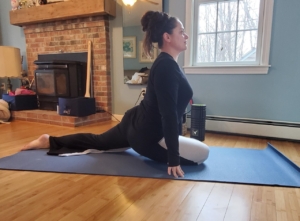
How to open them up: The best way to do this depends on your level of flexibility. Pigeon stretch feels great to some people, others might prefer to lay on their back and do figure four legs. A standing version can be easily adjusted to your flexibility level.


Ok, its obvious I need to stretch more, lol
Not to self – Do more yoga with Tabitha Rose! you can find her on FB: Tabitha Rose-Connect With Fitness

From a downward dog position, draw right knee to chest, then lie right shin on floor so that shin is parallel to top edge of mat as you lower down to mat with left leg behind you. Then lean forward if possible. Hold for 30 seconds. Repeat on other side.

If this is too hard – try a figure four pose!

#5 Your FEET

Why you need to stretch it: Your plantar fascia is the connective tissue that runs from your heel to the base of your toes. When you sit all day, it can cause them to become tight. When we stand up or go for a run following a full day of sitting, these tight muscles tug on our bones leading to inflammation and painful bone spurs & lead to plantar fascitis.

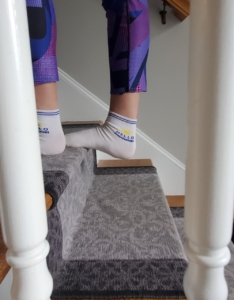
How to open it up: Rolling your feet over foot rollers or pointing and flexing your foot against resistance bands are the best ways to stretch these foot tissues and muscles. A targeted plantar fascia stretch can also open up the connective tissue. Try a stretch on your stairs.

image  

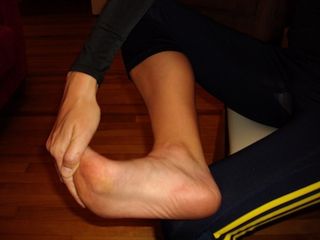
Sit down, and place the foot across your knee. Using your hand on the same side, pull your toes back toward your shin until you feel a stretch in your arch. Run your thumb along your foot—you should feel tension. Hold for 10 seconds.

Or use your stairs! place reminders on a few stairs & do it every time you go up! Remember to do both feet!

GOOD LUCK & STAY HEALTHY!

Stay tuned for more Wicked Good Blog posts coming soon! -Dr. Sarah
Or visit us: www.wickedgoodchiro.com

April 3, 2020/by Wicked Good Wellness Group
https://wickedgoodchiro.com/wp-content/uploads/2020/04/coffee.jpg 168 299 Wicked Good Wellness Group https://wickedgoodchiro.com/wp-content/uploads/2025/05/wicked-good-chiro-wellness-logo-300.jpg Wicked Good Wellness Group2020-04-03 17:50:132020-08-31 15:26:41Working from home? 5 stretches to help after a long day!
Blog

4 Start your Morning Pain Free Stretches

morning stretches

4 Stretches to Do First Thing in the Morning 

When most people wake up, they hit the ground running. Whether it’s making breakfast or checking your emails, it can (and should) wait. Before you ever leave your bed, there are a few stretches you should be doing each morning to help prevent pain throughout the day.


1. Low Back Stretch

Lie on your back and bring your knees to your chest. Pull both knees down toward your chest, relax, and hold for about 30 seconds.


2. Glut Stretch

Lie on your back with your knees bent, then cross your left leg over your right leg. Use both hands to pull your right knee toward your chest. You should feel a stretch across your left buttocks. Hold for about 30 seconds and then repeat on the opposite side.


3. Pelvic Tilt

Lie on your back with your knees bent. The small of your back should not be touching the bed. Tighten your abdomen so that the small of your back presses flat against your bed. Hold this positions for five seconds, then release. Repeat this at least three times.


4. Piriformis Stretch

Lie on your back with your right leg crossed over your left leg. Gently pull your right knee toward your chest until you feel a stretch in your buttocks. Hold for 30 seconds. Release and repeat 3 times. Then do the same on the opposite side.


Receive Regular Chiropractic Adjustments

In addition to these stretches, you should also be coming in for regular chiropractic care to get your spine checked. So don’t forget to schedule and adjustment soon!


October 23, 2019/by Wicked Good Wellness Group
https://wickedgoodchiro.com/wp-content/uploads/2019/10/stretch.jpeg 288 410 Wicked Good Wellness Group https://wickedgoodchiro.com/wp-content/uploads/2025/05/wicked-good-chiro-wellness-logo-300.jpg Wicked Good Wellness Group2019-10-23 13:51:072020-08-31 15:26:014 Start your Morning Pain Free Stretches
Blog

Wicked Good Life (style)

Wicked Good Life

Wicked Good News – We are hoping to start video and blog posts towards our new #wickedgoodlife series, as a spin off of our Wicked Good Chiro & Wicked Good Lifestyle Facebook & Instagram pages.
It will be full of great ideas on how to live healthier, fun facts about all of our services; like Chiropractic, Acupuncture, Eating healthy, Weight loss, Massage, Detoxification, Exercise, Infrared sauna, weekend survival tips, fun fitness ideas and so much more. I will host mini-interviews with some of my favorite experts. We are bombarded by so much information and if you ever “googled” something on health or weight loss, the pop-up ads will be everywhere you look so, I will discuss the latest in health trends, research, important things you should know & how to make sense of it all. You might even get a few fun moments from the way we lead our wickedgoodlife.  My goals have always been to treat my clients in a way to allow them to live pain free & so they can get out there & live their wicked good life.

We are open to wicked good ideas on subjects you want more information on or answering any questions you have about being healthy.  Stay tuned for more details.

August 26, 2019/by Wicked Good Wellness Group
https://wickedgoodchiro.com/wp-content/uploads/2019/08/WGL.png 225 225 Wicked Good Wellness Group https://wickedgoodchiro.com/wp-content/uploads/2025/05/wicked-good-chiro-wellness-logo-300.jpg Wicked Good Wellness Group2019-08-26 17:30:362020-08-31 15:27:16Wicked Good Life (style)
Chiropractic for Kids, ear pain, upper neck misalignment

Why R Chiro’s so Weird?

Read more
January 4, 2019/by Wicked Good Wellness Group
https://wickedgoodchiro.com/wp-content/uploads/2025/05/wicked-good-chiro-wellness-logo-300.jpg 0 0 Wicked Good Wellness Group https://wickedgoodchiro.com/wp-content/uploads/2025/05/wicked-good-chiro-wellness-logo-300.jpg Wicked Good Wellness Group2019-01-04 18:17:462020-08-31 15:32:03Why R Chiro’s so Weird?
chiropractic health benefits, diet advice, Functional Nutrition, healthy heart, Integrative Nutrition Health Coaches

Treating Symptoms Versus Treating the Person

In the dominant health care model today, medication is used to get rid of people’s symptoms. If the patient stops taking the medication, symptoms generally return.
Functional Medicine approaches health problems differently. Instead of masking the problem, it aims at restoring the body’s natural functioning. Although Functional Medicine practitioners may prescribe pharmaceuticals, they are used to gently nudge the patient’s physiology in a positive direction so the patient will no longer need them.

For example, conventional doctors would normally prescribe pharmaceuticals like Prilosec, Prevacid or Aciphex to treat acid reflux or heartburn. When the patient stops taking such drugs, the heartburn symptoms come back. In contrast, a Functional Medicine practitioner might find that a patient’s acid reflux is caused by Helicobacter pylori bacteria. Eradicating the Helicobacter pylori might very well lead to the end of heartburn symptoms, permanently.

It’s also important to note that in Functional Medicine, treatment for similar symptoms might vary tremendously for different patients, according to their medical history and results of laboratory tests. Factors that can come into play in producing the same symptoms include toxic chemicals, pathogenic bacteria, parasites, chronic viral pathogens, emotional poisons like anger, greed or envy, and structural factors such as tumors or cysts.

The Roots of Functional Medicine

Sir William OslerYou may be surprised to learn that Functional Medicine isn’t new. It actually represents a return to the roots of modern scientific medicine, captured in this statement by Sir William Osler, one of the first professors at Johns Hopkins University School of Medicine and later its Physician-in-Chief: “The good physician treats the disease; the great physician treats the patient who has the disease.”
Another important saying by Osler is “If you listen carefully to the patient, they will tell you the diagnosis.” This encapsulates the importance placed in Functional Medicine on taking a thorough history from the patient.

The preceding was written by Dr. Ron Grisanti of www.functionalmedicine.net

May 1, 2018/by kathy mackey
https://wickedgoodchiro.com/wp-content/uploads/2024/03/qtq80-RVCIpE.jpeg 1440 961 kathy mackey https://wickedgoodchiro.com/wp-content/uploads/2025/05/wicked-good-chiro-wellness-logo-300.jpg kathy mackey2018-05-01 18:15:232024-03-08 18:56:00Treating Symptoms Versus Treating the Person
Detox

3 tips to doing DETOX right

Tips for detox

Tips for detox

General Wellness, Metabolic Detoxification

3 Tips to Doing Detox Right

Nowadays, detoxing is on everyone’s mind, especially when living in increasingly toxic environments and experiencing negative health effects.

If you think that a detox might be right for you, there’s a way to do it right and ensure you are safely achieving the results you are looking for.

Here are three easy tips to keep in mind to make the most out of your detox:

  1. Do it at least twice a year.Your body is always detoxing—nonstop, 24/7—but it may not be doing it in the most efficient way because of nutrient deficiencies, stress, and even genetic factors. Based on my experience, I believe people can benefit from doing a dedicated detox protocol twice per year at the change of seasons (typically in March/April and in September/October). These types of detoxes will be a bit more rigorous than a gentle daily detox and should involve dietary changes, as well as the inclusion of specific supplements and some lifestyle changes. They may also be 10 days long for those who are relatively healthy or 28 days for individuals who require a more thorough inner “reset.” In addition to the biannual detoxes, I also think it is helpful to do some daily detoxing by eating your best, taking supportive nutrients, and reducing your stress to the best of our ability.
  2. Ensure proper nutrient intake.There is a common misconception that a detox must be a stringent fasting regimen. Often, it is associated with intermittent or complete abstinence from food or the consumption of fresh juices in place of food. What many people do not realize is that proper detox is just the opposite—specific nutrients are required to effectively eliminate toxins.Most people, even when eating a healthy diet, undoubtedly have some degree of nutrient insufficiency or deficiency. The degree of detoxing required is limited by the required nutrient that is in the lowest amount. Therefore, it is essential to get a complex array of macronutrients—like protein, carbohydrates, and fats—as well as vitamin and mineral cofactors—not to mention the protective, antioxidant phytonutrients. Taking shortcuts to detox by not accounting for nutrition will only short-circuit your detox pathways, so it’s imperative that you are taking the right supplements in combination with a nutrient-dense diet.
  3. Choose a safe detox.There are a variety of so-called detox methods available—everything from the extreme fasts to juice fasts to eating specific foods and taking certain supplements. With so much on the market, it seems like everyone has a detox program to tout. But they are not all equal, and some may not be adequately, scientifically formulated to provide appropriate nutritional support for your body’s metabolic detoxification pathways. Some may even be unhealthy and lead to negative symptoms.With that in mind, an appropriate detox may also provoke some changes in the body that could lead to subtle symptoms, like causing a bit more tiredness or discomfort from caffeine withdrawal. Unfortunately, many detox programs haven’t been researched extensively. Just last year, Drs. Klein and Kiat published a review of detox diets in the Journal of Human Nutrition and Dietetics.[i] Their findings suggest “there is very little evidence to support the use of these diets.”Fortunately, the Clear Change Program from Metagenics is based on researched protocols with actual human subjects. Some research studies on these protocols have even been published in the scientific literature.[ii] [iii] They are not only shown to be safe, but effective, too.

In summary, if you feel tempted to try out the latest detox program, keep this checklist in mind. It’s designed to help you know how often to do a detox, the importance of targeted nutrients, and, most of all, how to ensure your chosen detox is safe and based on good science.

[i]Klein AV, Kiat H. Detox diets for toxin elimination and weight management: a critical review of the evidence. J Hum Nutr Diet. 2015 Dec;28(6):675-86. doi: 10.1111/jhn.12286. Epub 2014 Dec 18.

[ii]Lamb JJ, Konda VR, Quig DW, Desai A, Minich DM, Bouillon L, Chang JL, Hsi A, Lerman RH, Kornberg J, Bland JS, Tripp ML. Altern Ther Health Med. 2011 Mar-Apr;17(2):36-44.

[iii]Bland JS, Barrager E, Reedy RG, Bland K. Altern Ther Health Med. 1995 Nov 1;1(5):62-71.

Buy it today at Scorcoran.metagenics.com

Share this post
Share on FacebookShare on Google+Tweet about this on TwitterPin on Pinterest
This entry was posted in General Wellness, Metabolic Detoxification on July 21, 2017 by Deanna Minich.

About Deanna Minich

Guest blogger Dr. Deanna Minich is an internationally recognized health expert and author with more than 20 years of experience in nutrition, mind-body health, and functional medicine. Dr. Minich holds Master’s and Doctorate degrees in nutrition and has lectured extensively throughout the world on health topics, teaching patients and health professionals about nutrition. She is a Fellow of the American College of Nutrition, a Certified Nutrition Specialist, and a Certified Functional Medicine Practitioner. Currently, Dr. Minich teaches for the Institute for Functional Medicine and for the graduate program in functional medicine at the University of Western States. Her passion is bringing forth a colorful, whole-self approach to nourishment called Whole Detox and bridging the gaps between science, soul, and art in medicine.

View all posts by Deanna Minich →
August 17, 2017/by Wicked Good Wellness Group
https://wickedgoodchiro.com/wp-content/uploads/2017/08/tips-for-detox2-680x312.jpg 312 680 Wicked Good Wellness Group https://wickedgoodchiro.com/wp-content/uploads/2025/05/wicked-good-chiro-wellness-logo-300.jpg Wicked Good Wellness Group2017-08-17 10:55:082018-05-01 12:45:263 tips to doing DETOX right
Foam Rolling, self-myofascial relief

Why Foam Rolling

Benefits of foam rolling for self-myofascial relief

Why foam rolling?

    • June 2017
    • Posted By WebExercises


Why foam rolling?

Benefits of foam rolling for self-myofascial relief
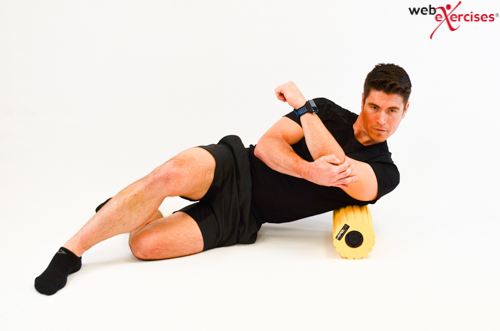
Self-myofascial relief is a self-massage technique that you can apply to release muscle tightness or trigger points. It can be performed with various tools, the foam roller being one of the most popular. Using a foam roller can help to increase the blood flow and thus decrease recovery time and increased range of motion, especially in muscles that are typically tight.

When and how to use a foam roller?
As foam rolling reduces tightness, increases range of motion and blood flow to the working muscles, it can be used as part of the warm up, ideally before stretching or cardio. It can be also used during the cool down part of the workout in order to speed up recovery time. Ideally foam rolling is used during both parts of the workout, but if time is limited it should be at least included in the warm up to reduce the risk of injury or altered movement patterns due to tight (i.e. inhibited) muscles. As for technique, it is important to execute all movements slowly spending between 30 – 90 seconds on each muscle to allow it to respond. If a tight spot is found, try to stay on it until it relaxes. The intensity can be altered by using your body weight pressing harder or softer into the foam roller.

In a recent study it also has been shown that self myofascial release with a foam roller can be effective for increasing flexibility when combined with static stretching. This was demonstrated when comparing foam rolling and static stretching of the hamstring muscles. The study findings indicate that using foam rolling in addition to static stretching is superior to either self myofascial release or static stretching alone.

About the author: Friederike is the VP of Business Development and Marketing Strategy at WebExercises. She is a certified personal trainer and previously worked for Reebok, BMW, and the Adidas Group in the US and Asia.

July 13, 2017/by Wicked Good Wellness Group
https://wickedgoodchiro.com/wp-content/uploads/2017/07/foam-rolling.jpg 331 500 Wicked Good Wellness Group https://wickedgoodchiro.com/wp-content/uploads/2025/05/wicked-good-chiro-wellness-logo-300.jpg Wicked Good Wellness Group2017-07-13 13:09:212018-03-15 17:42:30Why Foam Rolling
CBD oil

CBD Oil and how it can help you

CBD-oil
It took Friends, Friends of friends and patients to keep talking about how CBD oil is amazing, It was helping them with a wide variety of complaints, Including anxiety, pain, weight loss, feeling happy again…This got me thinking and researching. Of course as this article in a respected Chiropractic magazine will tell you its the WILD WEST out there. ALL Vitamins and supplements are unregulated, it is hard to find a good quality bio-available option for a multivitamin, but especially for a new porduct. Now this is nothing new, we’ve been talking this story about the non-regulation of supplements for years and only carry the TOP brands that are 3rd party tested and certified and are ABSORBABLE…yeah, thats probably important, right?So I searched for the best of CBD oil -phytocannabinoids are a powerful anti-oxidant -our body has natural receptors sites for this oil…for very good reasons. Think of it like FISH oil, but from a plant. So I did it! I found a NON-GMO oil with a proprietary delivery system straight into the body for use.
“”Michael Lioon of TruGen3 says his firm utilizes a delivery system that boosts the absorption and bioavailability of their hemp oil extract that contains CBD: “Our product is a phytocannabinoid-rich hemp oil containing CBD and Beta- caryophyllene. When these two phytocannabinoids are present, a synergistic effect on the CB2 receptor is created.””
Please find out more for yourself  – TruGen3 is now available at Wicked Good Chiropractic -No Rx needed-Dr. SarahCBD oil is shaking up the medical cannabis industry

Tammy Worth September 20, 2016
tammy-worthTammy Worth, a freelance writer based in Kansas City, Missouri, specializes in business and healthcare subjects. She can be contacted at tammy.worth@sbcglobal.net.

CBD Oil

Corinne Malanca credits cannabis with saving her father’s life.

Five years ago, Stan Rutner underwent chemotherapy for Stage 4 lung cancer.

After treatment, an inoperable brain tumor was found and he fell sick with pneumonia caused by his radiation treatments. Thinking Rutner only had weeks to live, Malanca turned to the internet for answers.

What she found was a startling statistic: Nearly half of all cancer patients’ deaths are caused by malnutrition. She purchased cannabis and coconut oil capsules and 24 hours after his first dose, Rutner was out of bed and eating like a teenager.


Six months later she added a daily drop of cannabidiol (CBD) oil (with a high THC content) to his regimen, and at nine months he was cancer free.

“We just wanted him to pass peacefully,” she says. “We were fortunate that he got a second chance.”

There was so much information—and misinformation—online that Malanca and her husband, John, decided to create United Patients Group, a resource for patients and physicians seeking knowledge about medical cannabis.

Chiropractors are accustomed to dealing with the claims and skepticism surrounding nutritional supplements. But CBD oil adds a new layer to the issue: The high-cost, controversial product is caught somewhere between a supplement, a medicine, and a proscribed narcotic. State and federal laws regarding its legal status are contradictory, industry regulations don’t exist, research is scant, and dosing is arbitrary.

But all of this shouldn’t necessarily cause providers to give up on the product. Most people agree that CBD oil is relatively safe. And there are promising stories like Malanca’s, showing potential where traditional medicine fails in areas such as chronic pain, impeding cancer proliferation, and seizure abatement.

Medical marijuana 101

The endocannabinoid system, discovered in the early 1990s, modulates various functions in the body. Cells in the system that house receptors, including CB1 and CB2, are “activated” by chemicals known as cannabinoids.

There are more than 80 different cannabinoids in Cannabis sativa L (marijuana and hemp). The two most well-known of these chemicals are CBD and tetrahydrocannabinol (THC). THC impacts the CB1 receptor.

Found mainly in the brain, it results in the euphoria received when smoking marijuana, particularly those strains bred to contain large amounts of THC.

CBD, on the other hand, activates the CB2 receptor. This receptor is present mainly in the immune system and is responsible for controlling processes such as inflammation.

Hemp has much lower amounts of THC, and it is increasingly being bred to have more CBD. This is partially due to the definition of hemp in the Agricultural Act of 2014; “industrial hemp” is supposed to be comprised of a THC content of 0.3 percent or less, making it legal for use by universities for research purposes.

The low-THC, high-CBD trend was also sparked by an understanding of CBD’s potential health benefits when, a few years back, media reports hit the airwaves about children who had been crippled by seizures obtaining relief with CBD.CBD Oil

Rodney Radtke, MD, chief of the epilepsy and sleep department at Duke Medical Center, says, “Everybody is talking about medical marijuana … even well-controlled patients [with seizures] are asking about it.”

Radtke says medical cannabis seems safe and initial studies regarding efficacy are positive. In fact, Nora D. Volkow, director of the National Institute on Drug Abuse, in testimony to the Senate Caucus on International Narcotics Control said a review of 25 studies didn’t find any major side effects with a wide range of doses of CBD.

And while Radtke doesn’t deter patients from using the substance, he also doesn’t recommend it because it isn’t fully understood.

“The perception is that doctors are against medical marijuana, but that’s not so,” he says. “What we want is for it to be investigated and shown to be efficacious and safe … we want a medication, not an herbal remedy.”

A purer path?

The goal with most medications is to get as much of the active ingredient into the bloodstream as quickly as possible. According to makers of the product, CBD oil does this well for a couple of reasons.

Unlike smoking marijuana, a process in which the whole plant is consumed, taking CBD allows for greater levels of the potent chemicals to be delivered in a smaller dose, which oil producers work to isolate and extract.

Also, compared to smoking cannabis, patients receive a higher amount of active chemicals passing through the bloodstream from CBD oil taken sublingually. “Patients begin to feel a difference in as little as four to six minutes and the full effect in less than 15 minutes,” says Brandon Hart of Black Rock Nutraceuticals.

Michael Lioon of TruGen3 says his firm utilizes a delivery system that boosts the absorption and bioavailability of their hemp oil extract that contains CBD: “Our product is a phytocannabinoid-rich hemp oil containing CBD and Beta- caryophyllene. When these two phytocannabinoids are present, a synergistic effect on the CB2 receptor is created.”

Questions of legality

Moving cannabis from its illegal status as a Schedule I drug (the same listing as heroine and LSD) to a Schedule II drug (such as oxycodone) is left to the U.S. Food and Drug Administration. But this listing was affirmed this month when the federal government released a statement saying marijuana has no accepted medical use and is vulnerable to abuse.

Most producers, however, claim their products are legal, largely because of a 2004 court ruling from the Ninth Circuit Court of Appeals. The court found the DEA could not ban organizations from selling food products made from hemp oil imported from outside of the country. Many sellers of CBD oil only use imported hemp and provide certificates proving its origin.

But Barbara Carreno, a spokesperson for the DEA, said this ruling doesn’t provide a loophole for these vendors. CBD oil is currently sold in violation of the Controlled Substances Act and the Federal Food, Drug, and Cosmetic Act, according to a DEA statement on the product.

“Just because it comes from hemp doesn’t mean it’s a legal medicine—technically it is not legal; they should not be selling it,” Carreno says.

The DEA, however, doesn’t concentrate resources on the use of hemp and medical marijuana, as long as it conforms to state laws, according to Carreno. Instead, it focuses on marijuana being grown on federal lands, being sold near schools, or moved across state lines.

“The DEA has always focused on large-scale drug trafficking,” she says. “We don’t focus on users or caregivers.”

Much of the enforcement efforts are left to state agencies, which is why the industry is proliferating. According to the National Conference of State Legislatures, at least 25 states have some sort of provisions for medical marijuana use—many focusing on hemp, the low- THC, high-CBD products that fall under the DEA’s 0.3 percent rule.

The Wild West

CBD oil’s legal status makes it a difficult product to research. But, as an increasing number of states opt to legalize medical and recreational use, funds have begun to flow. According to the National Institutes of Health, 281 research projects—accounting for $111 million—were focused on cannabinoids in 2015. Fifteen of these were related to CBD.

For now, though, which CBD compounds are best, how they should be dosed, and even the indications for use, all vary depending on the person whom you ask.

Lioon says his hemp oil extract, containing CBD, has virtually all of the THC removed. This is a policy most producers appear to be following.

Radtke says it’s CBD that helps control seizures; THC doesn’t. But THC, he says, does impact nausea and pain, and an equal combination of the two reduces spasticity.

Mike Harinen, of Bluebird Botanicals recommends whole-plant extracts. The various constituents in hemp appear to work better in conjunction with one another than when extracts are completely isolated, he says.

“When they are consumed together they do have some potentiating effect on one another,” Harinen says. “That is the entourage effect of cannabis.”

Even if someone decides CBD, THC, or a combination product is best, there is currently no way to know how much of either to use or how the dose will affect each person.CBD Oil

CBD can be used to treat anxiety, for instance, but too much can cause anxiety, too. CBD typically doesn’t make people high, but Malanca has seen people “stoned out of their mind” on just a CBD product.

Malanca has also known identical twins with Crohn’s disease who had different experiences with medical cannabis: One used a 50/50 combination, but for the other, a product with 25 percent CBD worked well.

The doses and formulations of CBD oil are as varied as its potential uses. A Google search will find research and claims that the product can be used therapeutically for seizures, inflammation, anxiety, cancer, MS-associated spasticity and neuropathy, pain, insomnia, depression, and nausea. It may also be taken simply for relaxation.

Proceed with care

Chiropractors who want to sell or recommend CBD oil should be able to help patients wade through the plethora of information on the internet. There is no prescription to write for CBD oil and producers are reticent to make claims about efficacy for fear of legal repercussions.

“It’s like buying vitamin C from Wal-Mart,” Hart says. “There is a lot of information out there, but be discerning with it. If possible, talk to a doctor to find out what to take and in what amounts.”

When recommending a product to a patient, CBD producers recommend a few must-haves for any oil.

Foremost is testing. Though there are no regulations for labs to follow (and testing has been notoriously faulty) having a certificate from an external lab is a requirement. The labs should test for CBD and THC content as well as impurities including mold, toxins, heavy metals, fungus, pesticides, and bacteria.

Any company worth its salt should be able to provide proof of internal and third-party testing, Hart says.

Malanca’s organization offers a seal of approval given to products that have passed “the most rigorous of tests.” Vendors should have representatives available to talk about their product’s safety and purity.

The second consideration is drug- drug interactions. Chiropractors should go over medications and other supplements patients are taking to watch for potential problems. For instance, Radtke says, CBD is known to reduce levels of Lamotrigine and enhance the effects of Clobazam, potentially making it toxic.

“There is so much interest in this that it speaks for itself,” Lioon says. “CBD has worked wonders for patients in pain who have tried different drugs that haven’t worked or who don’t want to get addicted to narcotics.”


October 31, 2016/by Wicked Good Wellness Group
https://wickedgoodchiro.com/wp-content/uploads/2016/10/CBD-Oil.jpg 500 750 Wicked Good Wellness Group https://wickedgoodchiro.com/wp-content/uploads/2025/05/wicked-good-chiro-wellness-logo-300.jpg Wicked Good Wellness Group2016-10-31 11:07:262018-03-15 17:53:19CBD Oil and how it can help you
Blog, Rapid Release Technology

Wicked Good has Good Vibrations…

Wicked Good has Good Vibrations…

Find out more about Rapid Release Therapy & how it can help you

Published on Apr 22, 2016
http://RapidResultsRelief.com Rapid Release Technology (RRT) is a safe, fast, cost-effective way to treat pain. Rapid Release Technology (RRT) uses Targeted High-Speed Vibration to penetrate deep into tissue. RRT sessions take just a few minutes, are comfortable and non-intrusive with lasting results. Many of our patients respond within a few sessions.

Rapid Release is the only device that targets scar tissue via resonance frequency.

Only Rapid Release elicits the Tonic Vibration Reflex instantly releasing spasms.

Rapid Release floats and separates the fascia, allowing ease of movement.

Increases blood flow, reducing hypoxia and releasing tension.

The Problem:

Scar Tissue forms in the body as a temporary patching mechanism for wounds caused by injury, surgery, trauma or repetitive stress. This scar tissue dries out and contracts over time creating tension, stiffness and hypersensitivity.

Adhesions can form and fasten two or more layers of tissues not normally connected, just like a spot weld fastens two pieces of metal together. Adhesions also increase tension and stiffness in your body.

Fascia Restrictions: Think of fascia as a shrink wrap that surrounds every muscle in your body. If this becomes dried out, it loses elasticity leading to more tension and stiffness.

Circulation. Cells need nutrients and oxygen to function properly. Without ample oxygen, a certain percentage of your muscle cells never fully release after you use them. Tight muscles restrict blood flow creating more tension. Many problems of the musculoskeletal system are related to muscle shortening (Lewit 1999)

Fluid restrictions can cause swelling, congestion, toxic buildup and restrict movement.

Trigger Points are hyperirritable spots in the fascia surrounding skeletal muscle also known as knots.

https://www.youtube.com/watch?v=hGbna…

May 12, 2016/by Wicked Good Wellness Group
https://wickedgoodchiro.com/wp-content/uploads/2016/05/RRT.jpg 225 225 Wicked Good Wellness Group https://wickedgoodchiro.com/wp-content/uploads/2025/05/wicked-good-chiro-wellness-logo-300.jpg Wicked Good Wellness Group2016-05-12 16:40:142024-03-08 18:58:00Wicked Good has Good Vibrations…
Page 2 of 3123

Archives

Categories

Wicked Good Chiropractic & Wellness Group. All Rights Reserved
  • Welcome
  • About
  • Services
  • New Patients
  • Contact
  • Schedule Your Appointment
  • SMS Privacy Policy
  • Privacy Policy
Scroll to top Scroll to top Scroll to top